Communication and transmission
Mrs DallowayCommunication and transmission is both a central preoccupation and a failure of connection in the scenes surrounding Septimus Warren Smith. He experiences the world as sending him messages about beauty, love, and truth, and he tries to put those discoveries into words and writing. But the people around him do not share the meanings he perceives, while doctors answer his distress with diagnoses and plans that leave little room for his account. The result is not simply silence: messages multiply, but understanding does not follow.
Messages in the World
For Septimus, communication begins as an interpretation of signs. When he sees smoke writing in the sky, he reads its shapes as an inexhaustible gift of beauty, offered freely and without end. Lucrezia Warren Smith has been encouraged by Dr. Holmes to turn her husband’s attention outward; she points out what is above them. But she and the nursemaid identify the smoke as an advertisement for toffee, spelling its letters aloud. The scene gives the same visible sign two incompatible meanings: a private revelation for Septimus and a commercial message for the others. His tears testify to the intensity of the experience, not to a shared understanding of it.
That gap recurs in Septimus’s effort to make a revelation public. He believes that trees are alive and that there is no crime, and he associates these claims with universal love. The message, he thinks, must be told to the Prime Minister and the Cabinet. Yet when someone asks what he is saying, he cannot reliably explain the contents or purpose of his speech. His words come in fragments, and the thought he calls the supreme secret remains difficult to deliver. Communication matters to him as an obligation to disclose truth, but the importance he attaches to disclosure does not give him a common language with his listeners.
Writing and the Need to Be Heard
The wish to transmit his thoughts persists beyond speech. Septimus links communication with health and happiness, and Rezia sees him trying to formulate that conviction aloud. Frightened by his condition and by his apparent inability to recognize her, she sends Agnes to fetch Dr. Holmes. Her response is practical and urgent, but the call for help does not make Septimus’s meanings more intelligible to those who arrive.
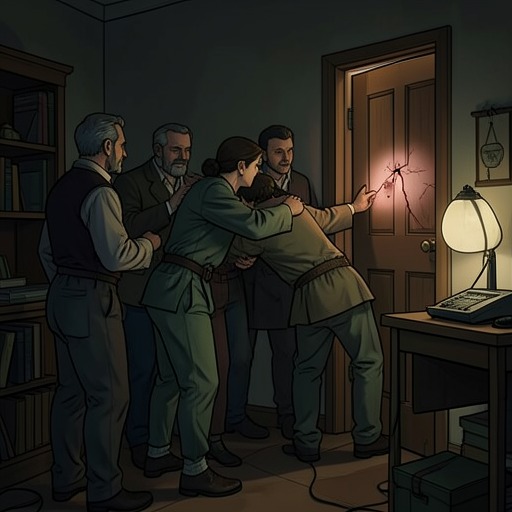
Rezia also observes the writings that accumulate in the table drawer. They concern the war, Shakespeare, discoveries, and the claim that there is no death. Septimus may stop midway, change direction, or want to add something after hearing a new thought; Rezia writes down his words as he speaks them. The papers are thus evidence of an effort to preserve and transmit ideas whose sequence is unstable. They also show the difference between recording speech and understanding it: Rezia can set down what he says while still finding some of it beautiful and other parts nonsensical.
His words return to the question of the dead. When Rezia mentions roses she has bought from a poor man in the street, Septimus imagines that the man may be Evans, his dead friend, and connects the flowers with their having been picked in the fields of Greece. The assertion that communication is health follows from this blending of present objects, remembered war, and the dead. The roses become part of a message he can perceive, but Rezia hears him talking to himself and asks what he means. A phrase that seems to join life and memory for Septimus arrives to her as a source of alarm.
Clinical Speech and Unequal Listening
The encounters with Sir William Bradshaw expose a different failure of communication: the authority to define what is happening rests with the doctor. Rezia tells Sir William that her husband has done nothing wrong. She confirms that Septimus has threatened suicide but says he did not mean it. Sir William instead declares him seriously ill and presents prolonged rest in a country home as necessary. When Rezia asks whether Septimus is mad, the doctor avoids that word, describing the issue in terms of a deficient sense of proportion. The difference is not merely vocabulary: his account of the case determines what is to happen next.
Sir William tells Rezia that she cannot accompany Septimus because the people patients care for most may not be good for them while they are ill. He characterizes the arrangement as a matter of law, promises that nurses will care for Septimus, and says he will visit weekly. The plan is delivered as settled even though Rezia has asked for help and does not want her husband separated from her. She leaves the consultation feeling deserted. In this exchange, professional communication is clear enough to impose a decision, but it does not produce mutual understanding or reassure the person who has sought assistance.
The failure is also visible in Septimus’s own attempt to confess. In Sir William’s presence, he begins to say that he has committed a crime; the doctor assures Rezia that he has done nothing wrong, but Septimus’s sense of guilt is not thereby answered. Sir William encourages him to speak and refers to his promising career. Septimus tries to recover his message about love, trees, and the absence of crime, then cannot remember it. The conversation offers a sharp contrast between the doctor’s confidence in his assessment and the patient’s inability to transmit the truth he believes he must disclose.
A Pattern of Blocked Connection
The novel sets Septimus’s attempted communication against repeated experiences of being unable to reach or be reached by others. In Regent’s Park, a small dog’s approach intensifies his fear; a moment that might be ordinary to another observer becomes part of a frightening transformation he thinks he sees. Elsewhere, when Rezia’s wedding ring is off her hand, Septimus understands the gesture as the end of their marriage and imagines himself alone, called to receive truth before other people. His interpretation moves from a concrete sign to an all-encompassing message, while Rezia’s explanation that her hand has grown thin does not correct it.
The separation between experience and interpretation also shapes Rezia’s care for him. She sees Septimus smiling and recognizes a moment of happiness, but that expression is difficult for her to bear because his behavior has become strange and unpredictable to her. She has written down his thoughts, witnessed his excitement, and heard him say that Evans has returned. Her attention is sustained, yet attention alone cannot bridge the distance between his perceptions and the account of illness she hears from the doctors. The novel grants the reader access to both perspectives without making them equivalent: Rezia is a witness to his behavior, while Septimus’s inward experience gives that behavior meanings she cannot share.
Communication and transmission therefore names more than speech or writing in Septimus’s story. It includes the signs he reads in smoke, flowers, trees, and the dead; the notes Rezia preserves; his interrupted attempts to confess; and the clinical conversations that decide his future. His conviction that communication is bound to health and happiness stands beside a world in which messages remain private, become unintelligible, or are overridden by institutional authority. The recurring mismatch makes the desire to be heard consequential: Septimus’s need to convey truth persists, even as the channels available to him fail to carry it to the people who could respond.